Marketing Hub: Platform Implementation & Collateral Rebrand
I led the six-month rollout of HomeWell’s new Marketing Hub, rebuilding our collateral library for a completely new platform while figuring out the workflows, limitations, and technical issues that came with it.

After identifying bottlenecks in HomeWell’s existing asset process, I led the implementation of a new centralized Marketing Hub. Over six months, I rebuilt and rebranded 300+ assets, created 60+ customizable templates, and established the structure, workflows, and user experience needed to support a growing franchise network.
The Problem
A workflow that couldn't scale with the network
As the sole designer creating templates across multiple franchisee use cases, production had become a bottleneck as the library grew. Publishing added another layer of complexity: assets moved through an external production workflow, making it harder for our internal team to manage updates, consistency, and quality as the library grew.
Franchisees felt the limitations even more directly. The existing platform also offered very limited localization, with few options for customizable fields or self-service editing beyond static downloads.
HomeWell needed a system that brought more of the publishing and customization process in-house, giving our team greater control over asset management while allowing 100+ franchise territories to personalize materials for their local markets.
Multiple
Franchisee use cases to support
1
In-house designer supporting the entire library
Limited
Localization options on the previous platform
The Process
Structuring every asset to work with the platform
Getting a customizable piece into the Marketing Hub meant more than uploading a file. Each asset had to be structured so the platform could recognize what franchisees were allowed to edit and what needed to stay locked.
I built that structure in InDesign using XML tags to separate fixed and variable content — from universal brand elements to location-specific details like service areas, contact information, and program selections. I expanded and refined the tagging structure until it worked consistently across different asset types and franchise use cases.
Once an asset was uploaded, I configured each generated field to define how it behaved: what type of content it accepted, what information appeared by default, whether it was editable or required, and when it needed to auto-fit.
Those decisions ultimately shaped the franchisee experience — what they could customize, what stayed protected, and what automatically populated from their location data.

Fixed vs. Variable Content Structure
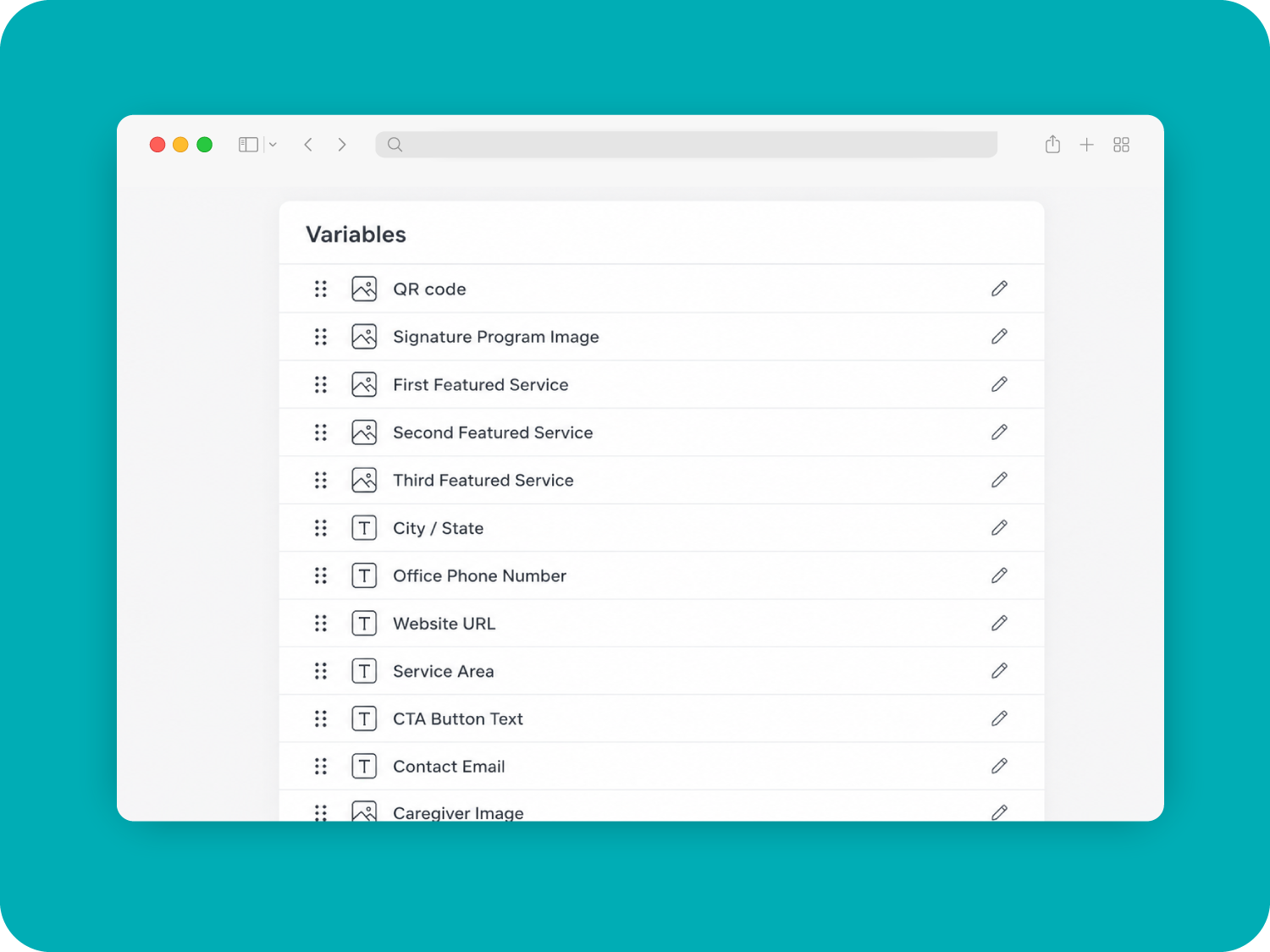
GENERATED PLATFORM VARIABLES
Dev Collaboration & Platform Customization
Shaping a third-party platform to feel like ours
Marvia’s platform came with its own front end, but there was room to customize how the experience looked and worked. I adapted the homepage, page layouts, navigation, and iconography to better reflect HomeWell’s brand, while working within the parts of the platform controlled by Marvia’s development team.
Where the default experience didn’t fit our needs, I looked for better solutions rather than working around the same limitations long-term.
One of the biggest improvements came from working with Marvia’s development team to create more flexible account-based content rules. This allowed the platform to better tailor what users saw based on their needs, reducing the amount of duplicate asset setup required behind the scenes.
Throughout implementation, I also surfaced bugs, tested backend behavior, and worked with Marvia on front-end adjustments that better supported how our team and franchisees actually used the platform. The result was an experience that felt less like an off-the-shelf vendor tool and more like a system built around HomeWell’s needs.
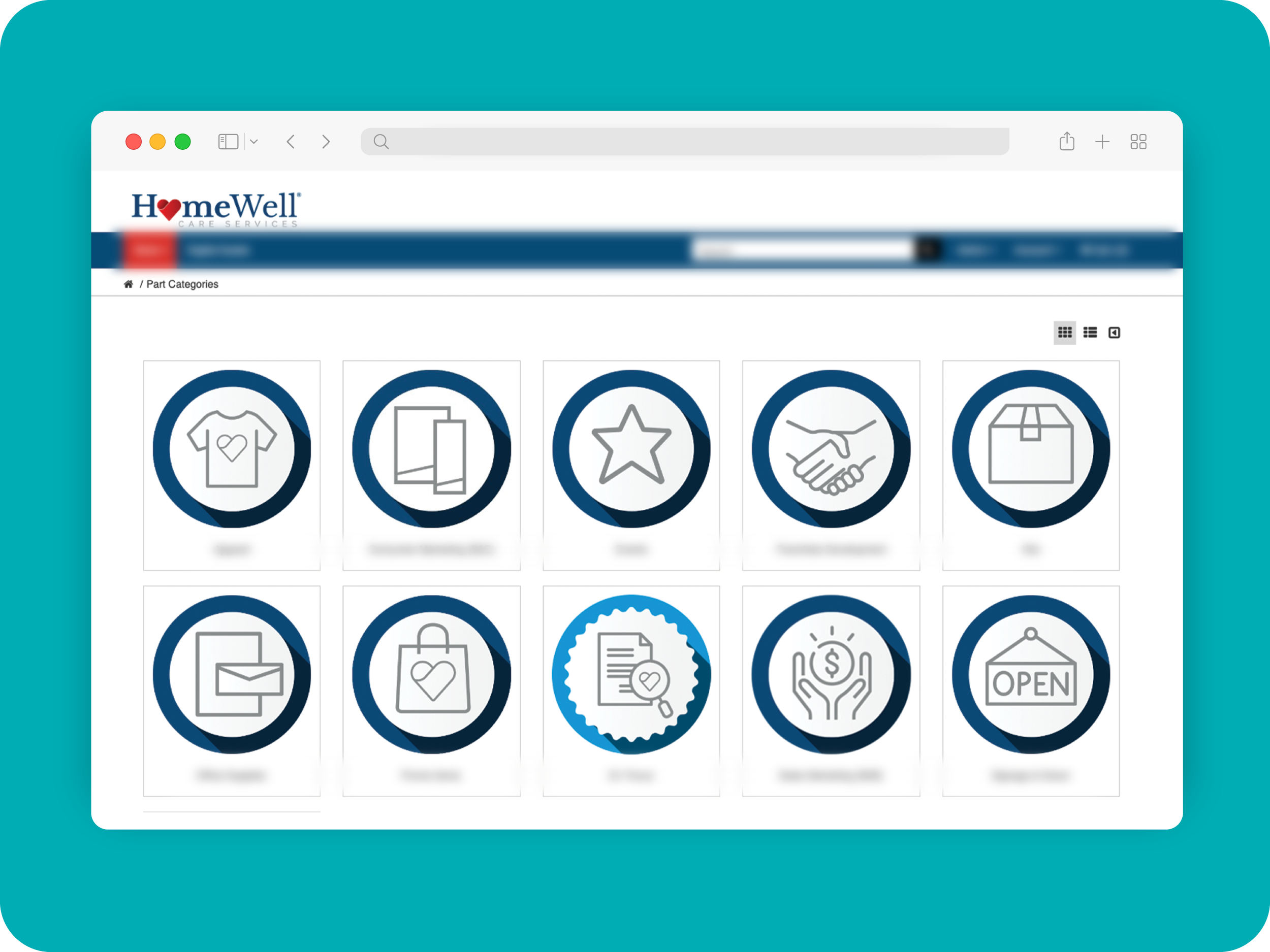
Before — Old Marketing Hub Platform
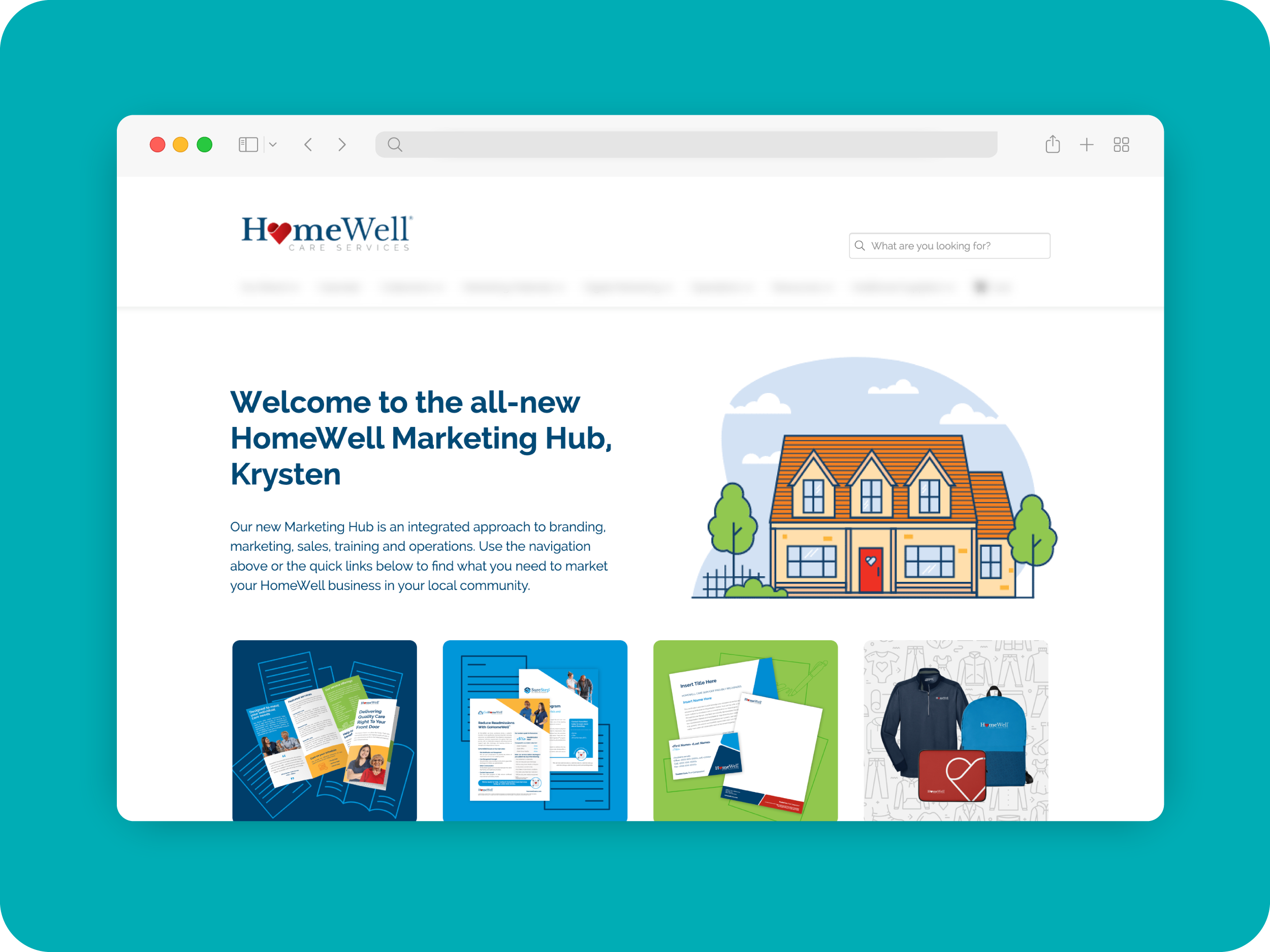
After — New Marketing Hub Platform
User Journey: Finding a Print Piece
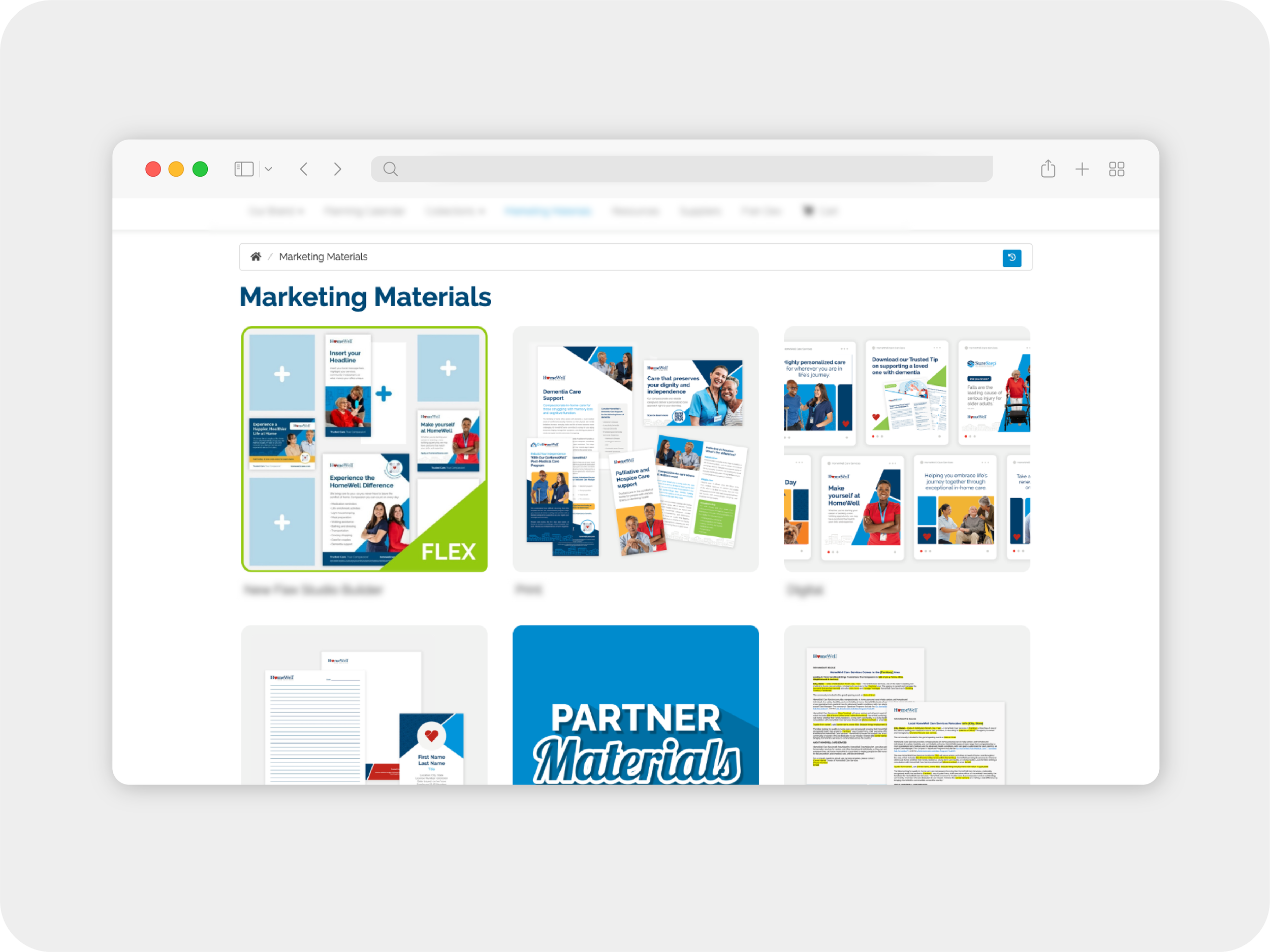
Marketing Materials
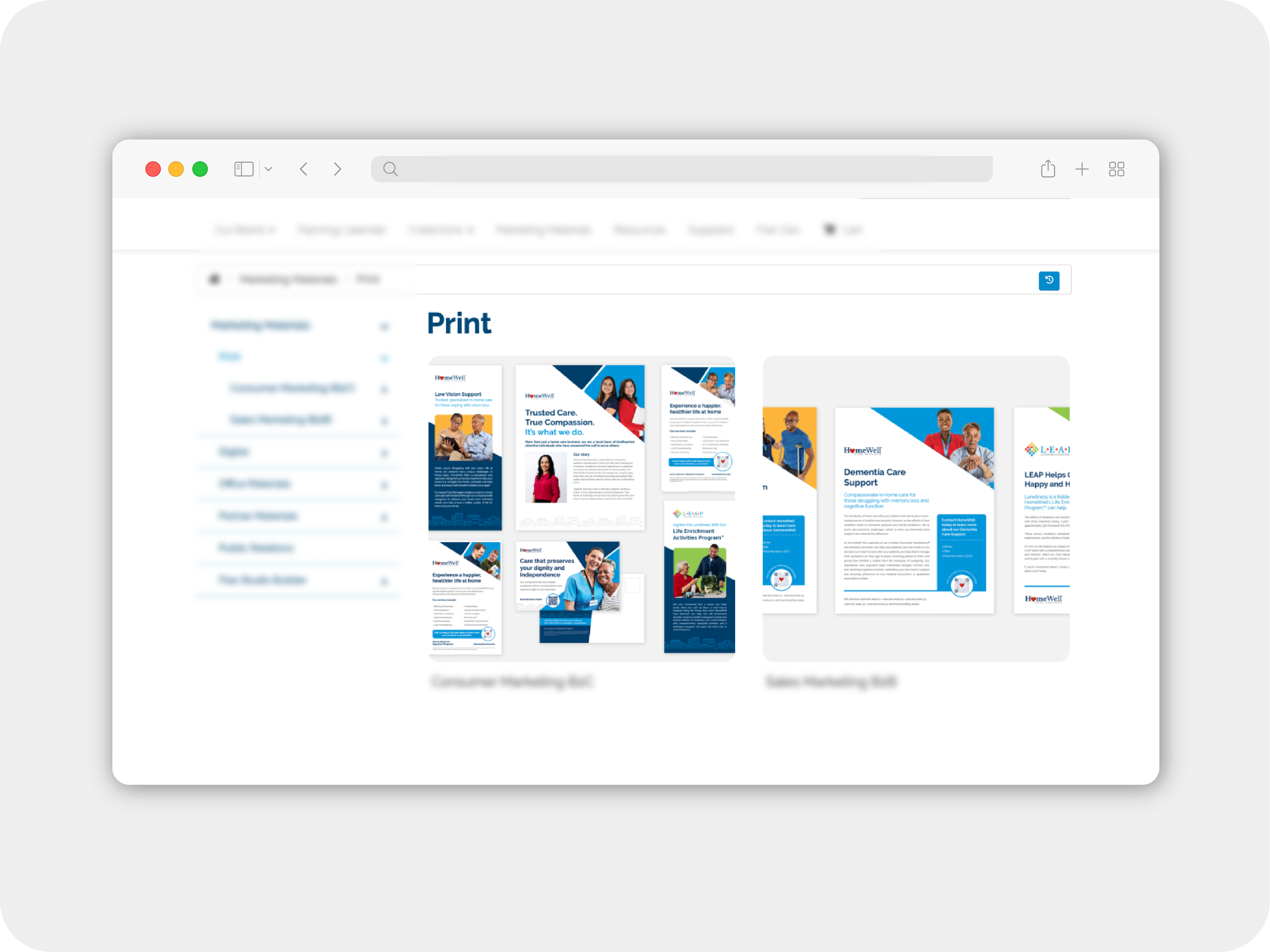

Print Collateral
Visual Execution
300+ assets, rebuilt for a new system
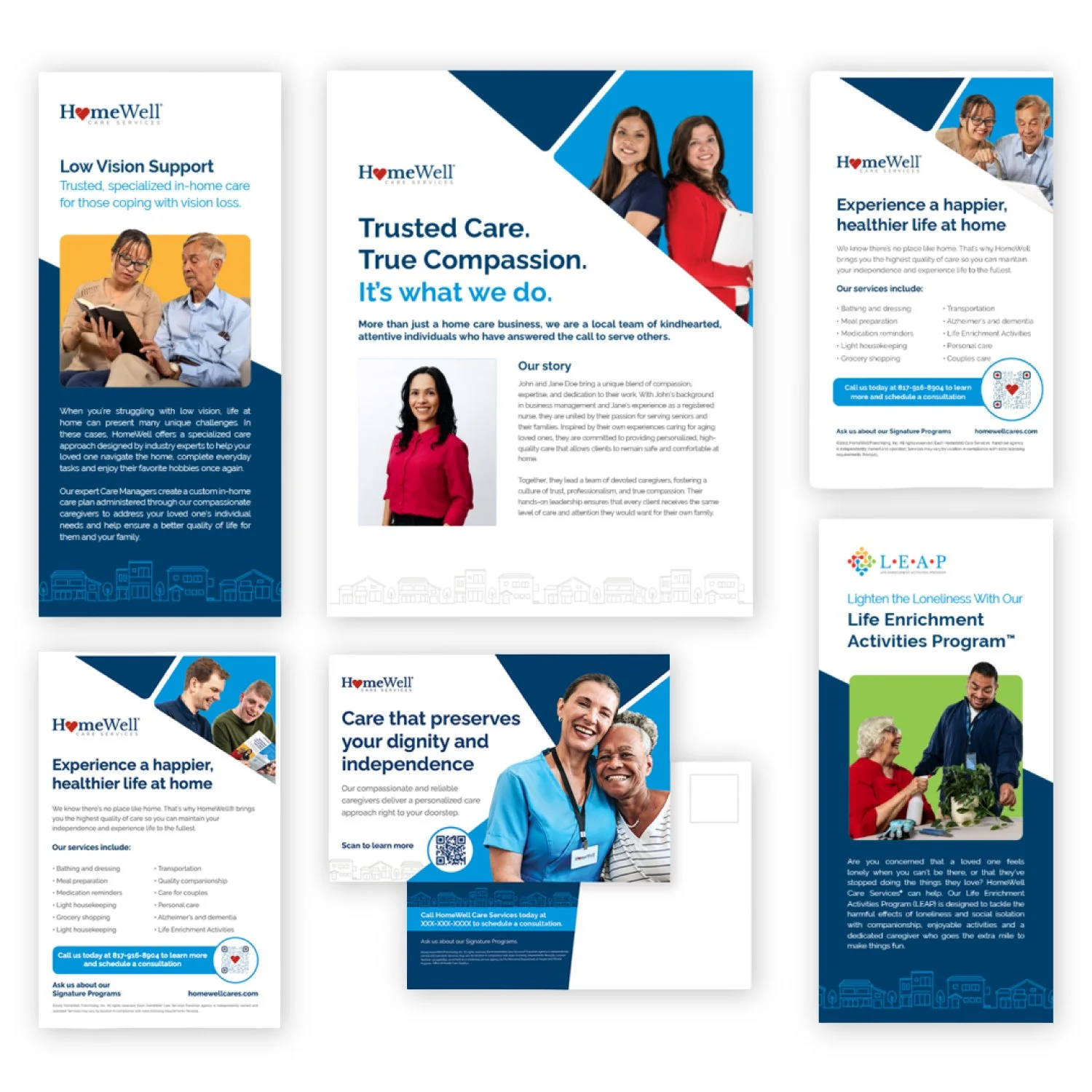
Every piece in HomeWell’s collateral library had to move from static, locked files to templated assets that could live inside the Marketing Hub — office materials, print collateral, and digital/social content alike. That meant redesigning each category to work within the platform’s tagging structure while keeping the visual system consistent across 100+ territories: the same brand voice and visual language, now built to flex by location rather than remain fixed.
The result was a library that looked and felt like HomeWell everywhere it showed up — from a business card to a dementia care flyer to a social post — while giving franchisees more flexibility to personalize materials for their local markets.
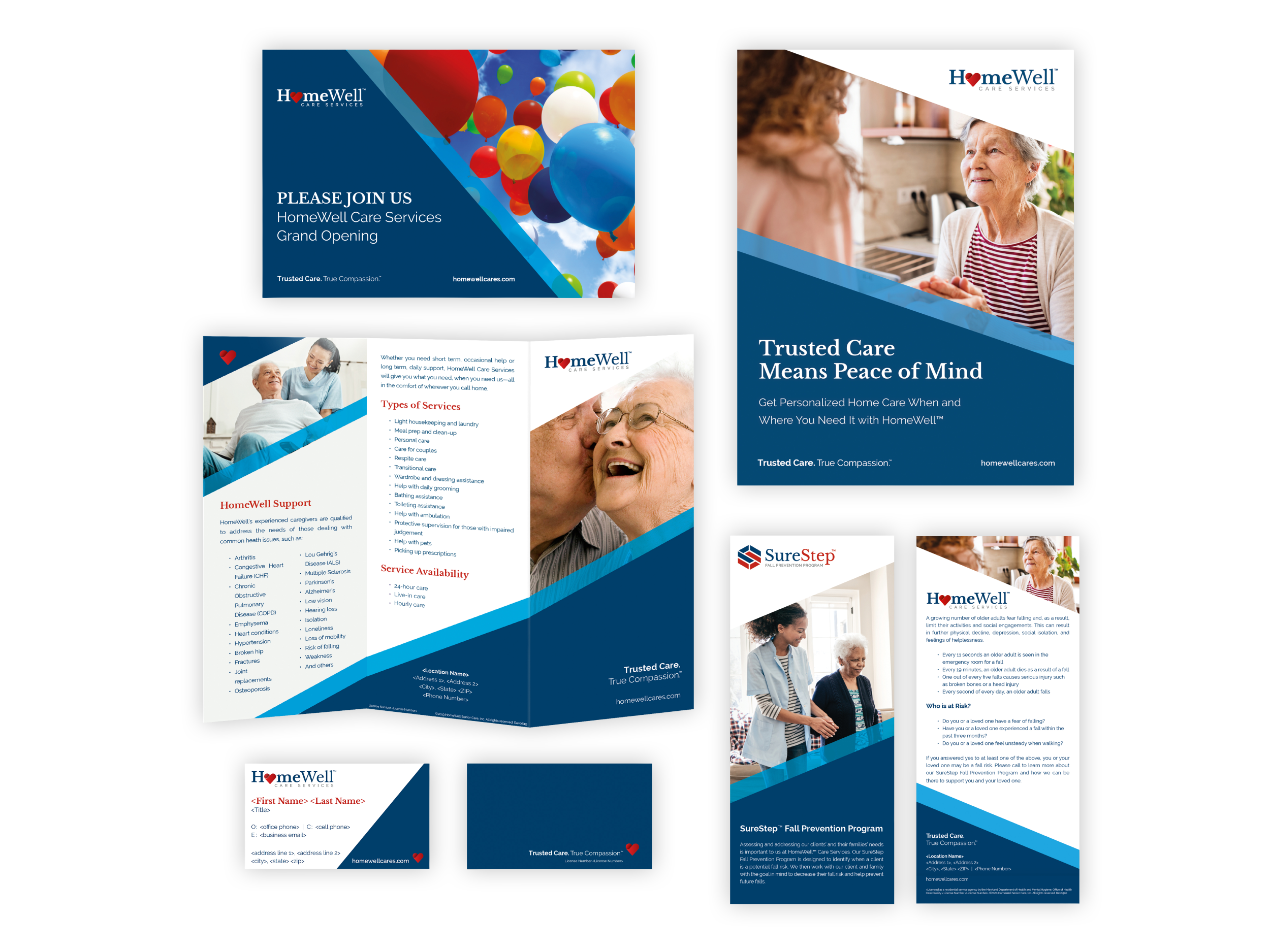
Before — Original Branding
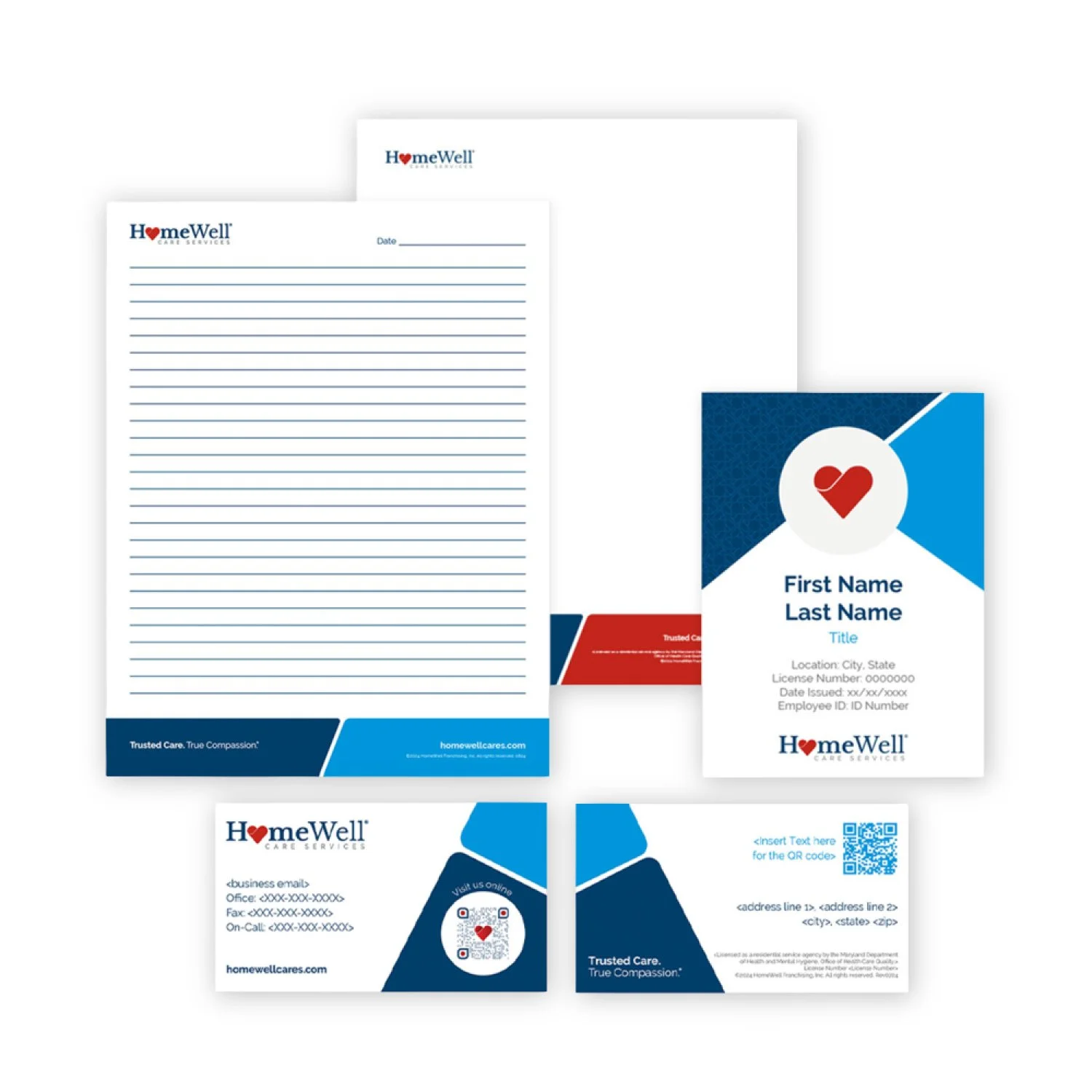
Office Materials
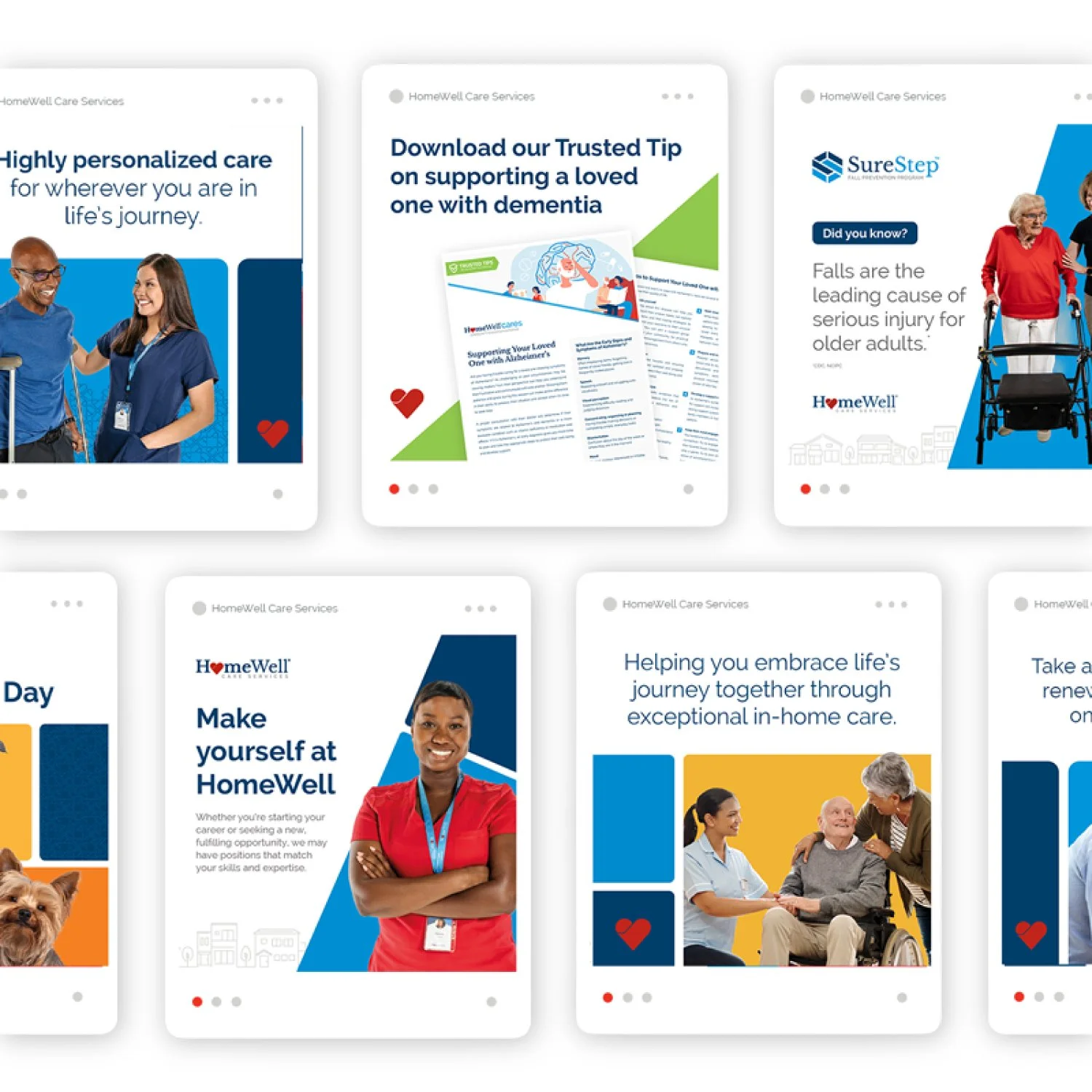
Social
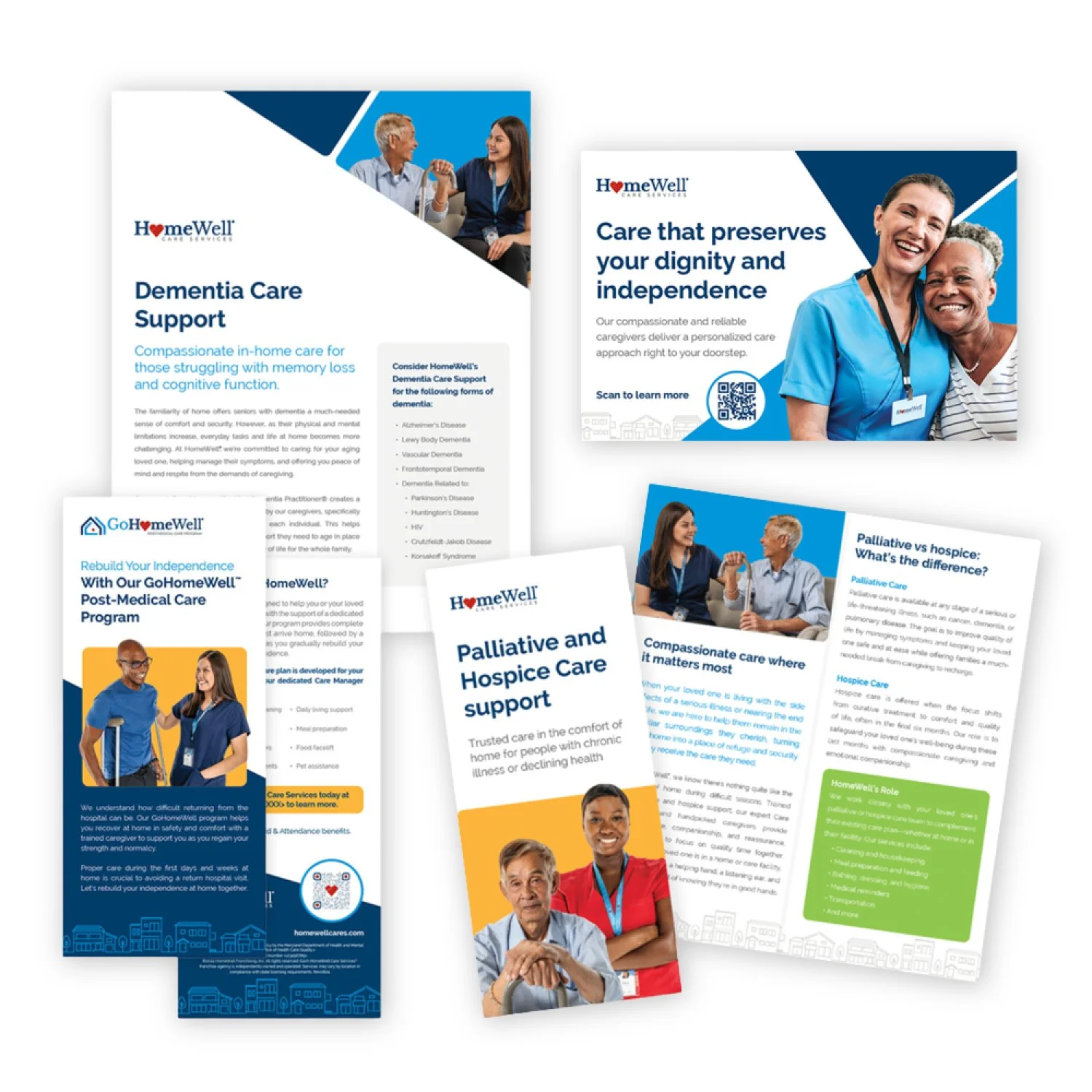
More Print Collateral
After — New Branding
Workflow Management
Centralizing the rollout, one issue at a time.
The Marketing Hub rollout involved stakeholders across HomeWell and Marvia, with much of the day-to-day issue tracking and follow-through falling to me. With requests moving across email threads and multiple teams, I created a shared Trello board to centralize bugs, feature requests, priorities, and implementation questions in one place.
The board became the working system for the rollout, helping both teams track what was open, what needed attention, and what had been resolved. It gave Marvia the context they needed to act on each issue while giving our internal team a clearer view of progress throughout implementation.
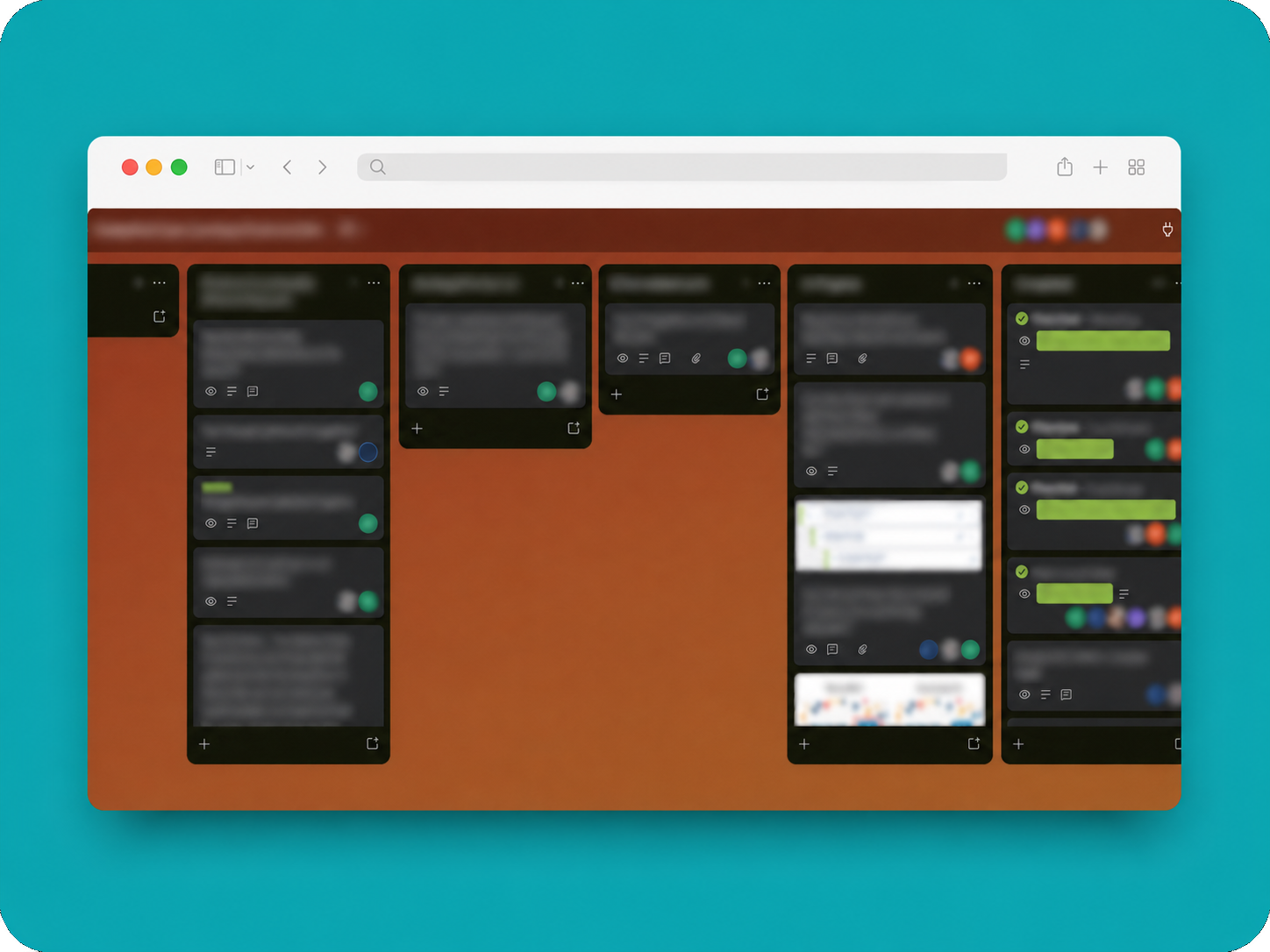
The Workflow Board
90+
Issues and requests tracked through rollout
1 shared system
for cross-team issue tracking
End-to-end visibility
from intake through resolution
Enablement & Training
A guided first login for every new user
A new platform is only useful if people know how to use it. I built a 12-step onboarding walkthrough in Pendo that launched automatically the first time a user logged into the Marketing Hub, introducing the brand guidelines, planning calendar, Flex Studio, and other core tools one step at a time.
The walkthrough gave every new user a consistent starting point, making the platform easier to navigate and creating a more scalable onboarding experience without relying solely on live training or support.
The Onboarding Walkthrough
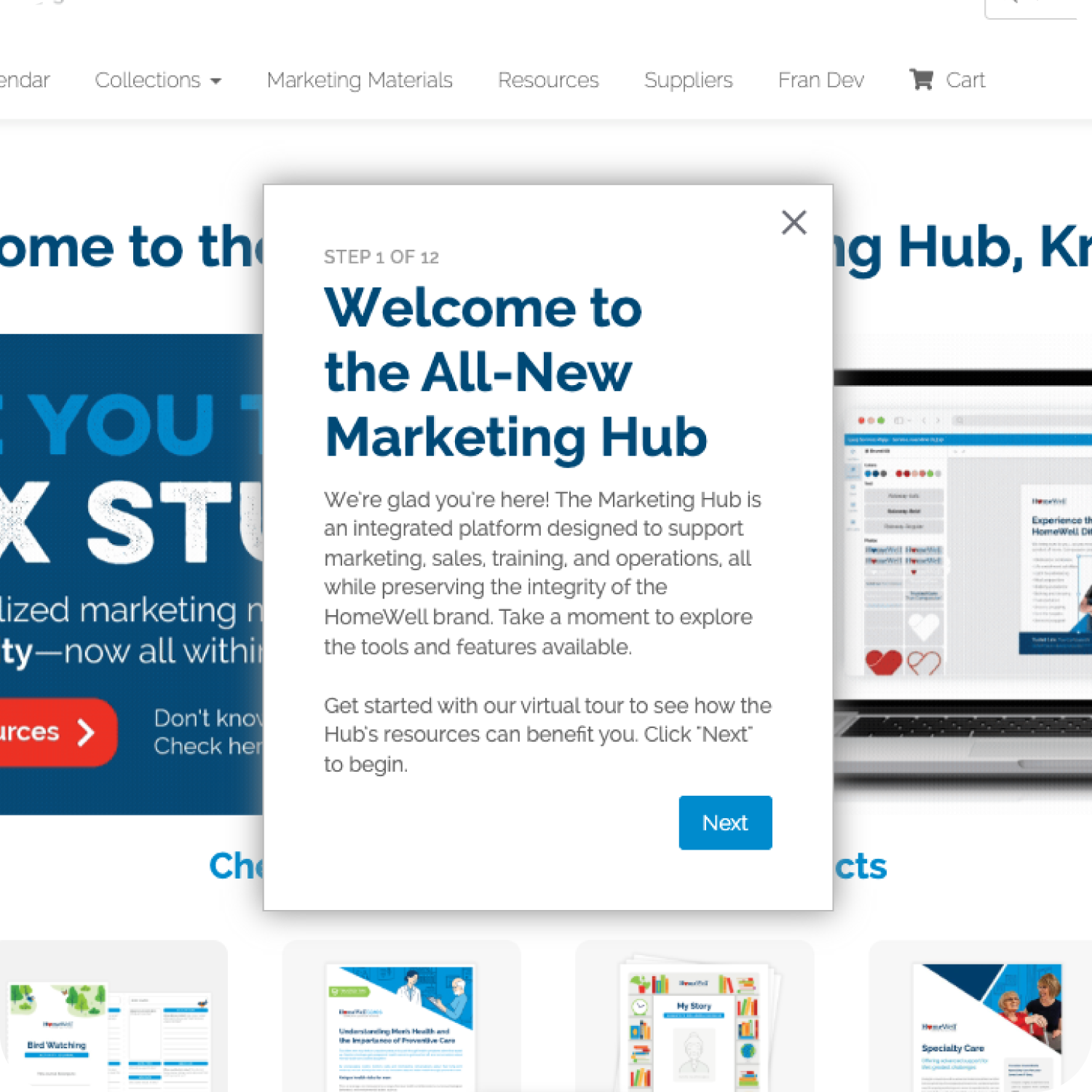
Step 1: Welcome
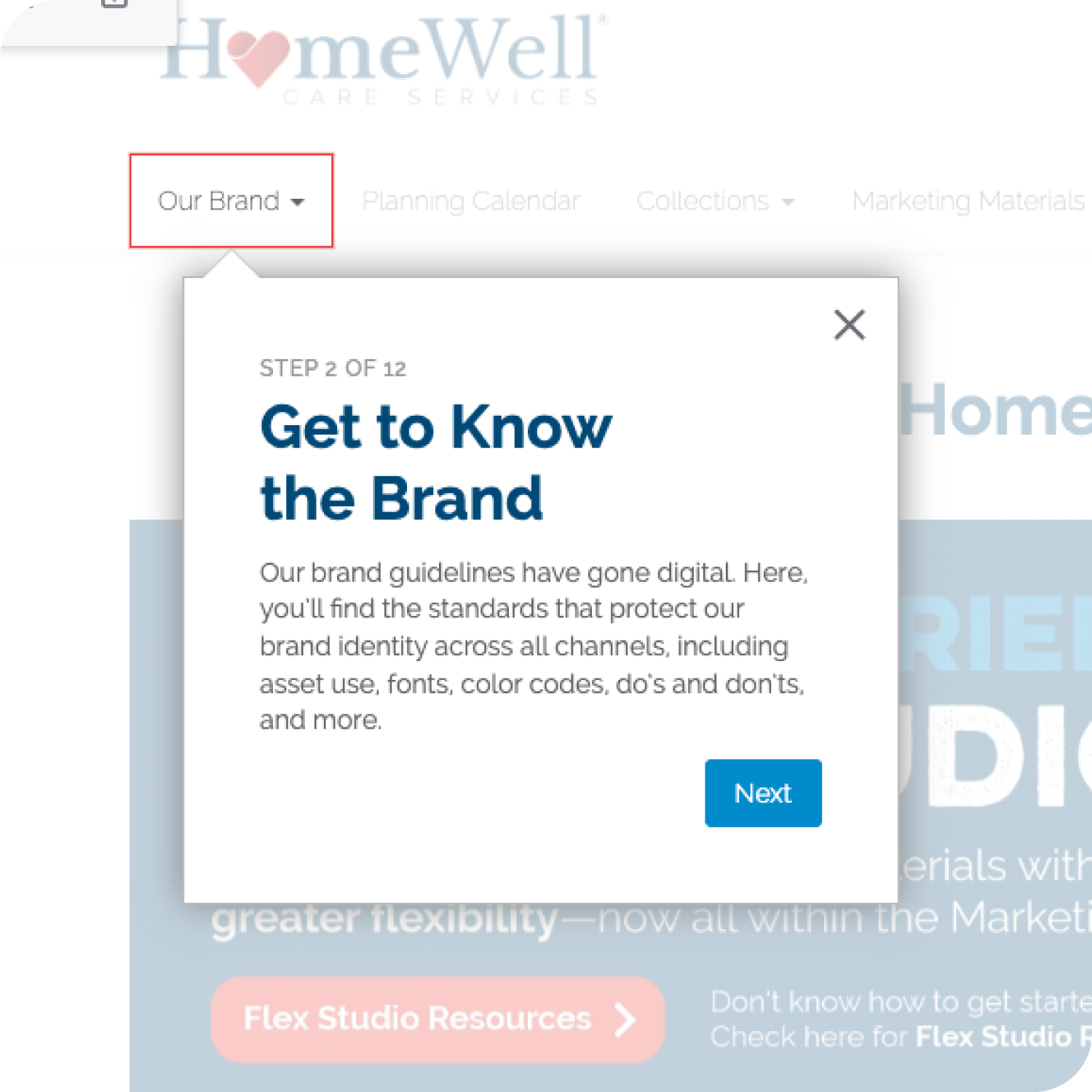
Step 2: Get to Know the Brand
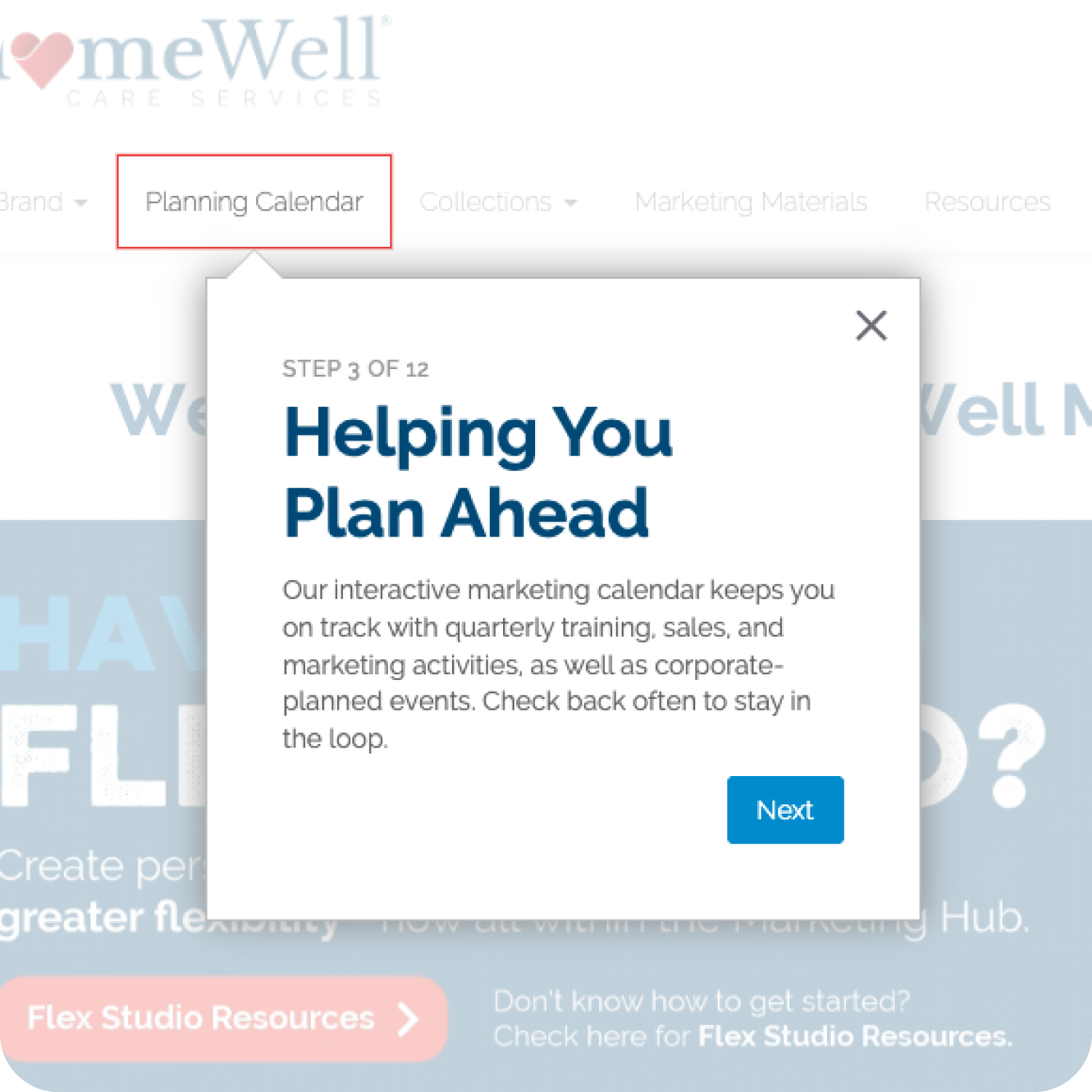
Step 3: Plan Ahead
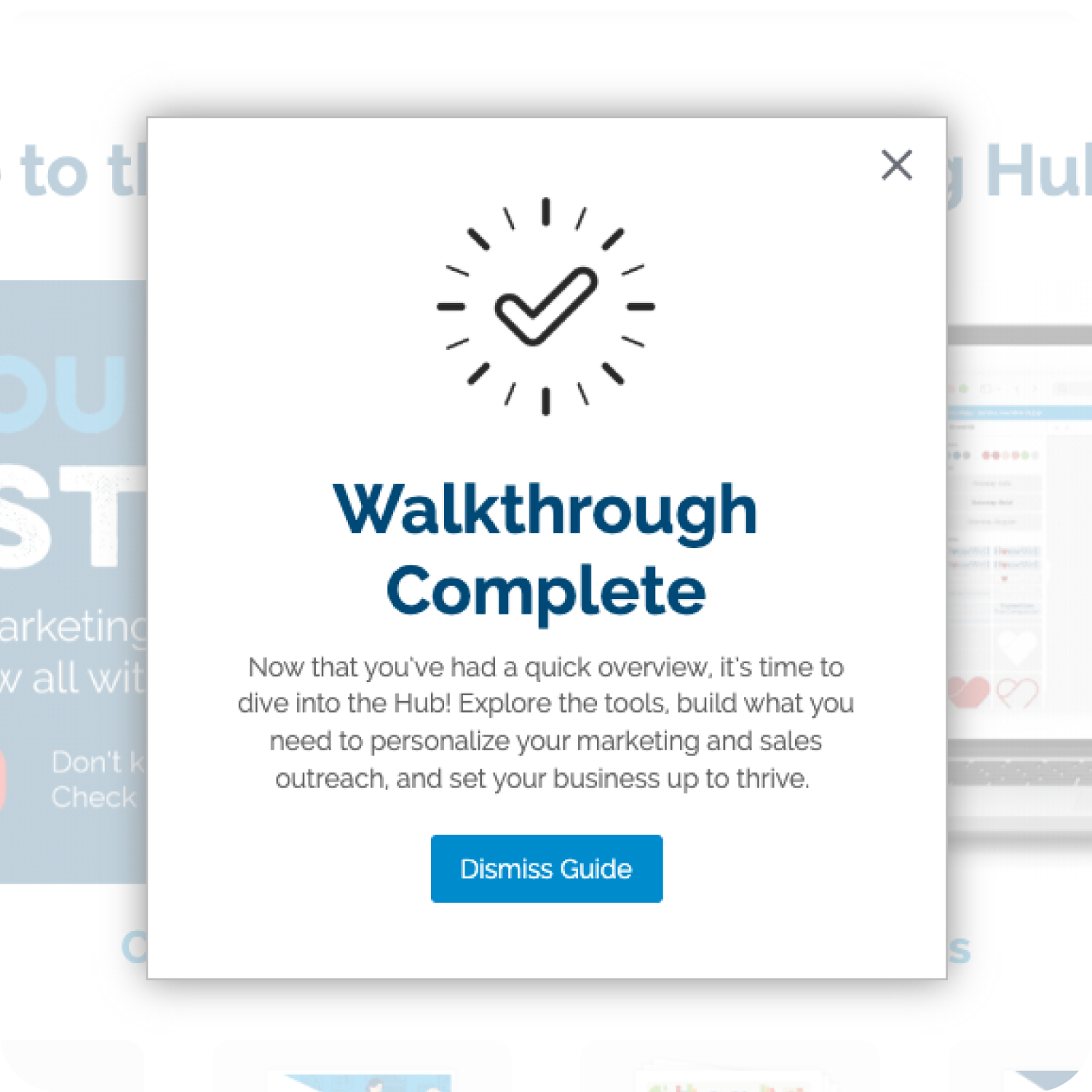
Step 12: Complete
Outcome
A system HomeWell can manage on its own timeline
The Marketing Hub replaced a fragmented publishing workflow with a more centralized system that gave HomeWell greater control over how assets were managed, customized, reviewed, and released. Over six months, I rebuilt and rebranded 300+ assets, created a more flexible template system, and helped bring day-to-day platform management in-house across a network of 100+ franchise territories.
The new structure also reduced duplicate asset setup, centralized rollout issues and requests, and created a more consistent onboarding experience for new users. What had been a static, vendor-dependent asset library became a more flexible system HomeWell could manage, evolve, and publish on its own timeline.
300+
Assets rebuilt for the new system
100+
Franchise territories supported